top of page

Showcase
October 2026
Photographer's Choice
The Minimalist Landscape
A portfolio of human-made imperfect images. Captured at real locations, using real light and film or digital sensor exposed to real photons. Real life experiences and lasting memories. No AI.
This Monthly Showcase is dedicated to minimalist landscape photography, a unique style within the landscape genre. Although there is no firm definition of what minimalist landscape is, it is generally recognized as the art of reduction. Compositions should only include essential elements like isolated subjects and negative space. Colors express muted saturation and limited hue palettes and are not a dominating element of the composition. Weather phenomena like fog, mist, rain, and overcast light naturally desaturate vibrant colors and isolate subjects and are therefore ideal shooting conditions.
I have selected a few photos from my archives, which I believe showcase this approach. I hope you enjoy them!
JMZ

Moeraki Boulders at dawn, New Zealand. The evening before I shot this frame of these unique formations we had a fiery sunset. At the time I was more impressed with the sunset version, today I actually like this one better.

Full moon at sunset, south central Colorado. This photo was taken close to Great Sand Dunes National Park. We were on our way back to the motel when I saw the moon above this "empty" landscape. The photo consists almost only of empty space, which makes the moon stand out.

Ice formations on a foggy winter morning at Lake Michigan, Illinois. The fog helped to isolate the ice structures on the beach.

Lone Tree at Custer State Park, South Dakota. It was late afternoon when we drove through the state park searching for bison. When I saw the tree on the hill I stopped immediately and took this frame with a tele lens. A lot of empty space and just one subject.

Melting glacier ice, Diamond Beach, Iceland. It was a February morning when we visited Diamond Beach at the south coast of Iceland. The beach sits next to the outlet of a glacier lagoon where glacier ice floats into the Atlantic. Some of the icebergs are washed onshore where they slowly melt. This guy was only about 3 feet tall and I used a wide angle with a very close focal distance.

Mangrove trees at dusk, Key Marathon, Florida, I took this photo after dinner, when we left the restaurant and walked back to our motel I saw these mangrove trees. The light started fading and the pastel colors of the late evening sky became visible. I went into the water to get a lower viewpoint.
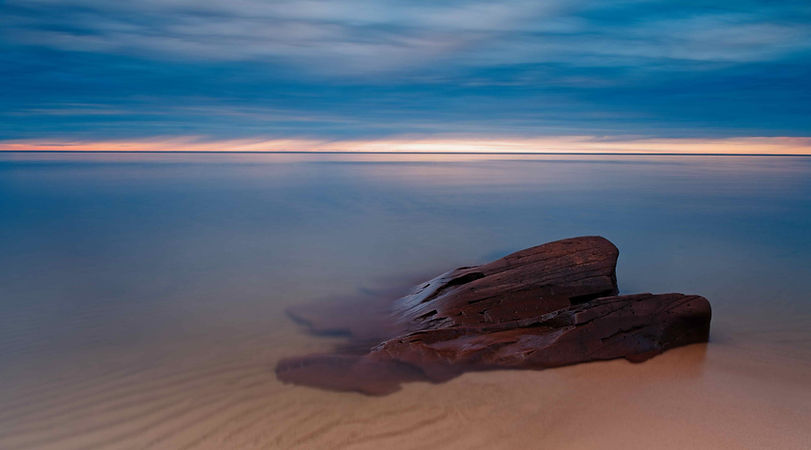
Sunset at Lake Superior, Porcupine Mountains State Park, Michigan. After a day of hiking we drove back to the motel when we passed by this location. It was an overcast day and the sun just disappeared below the horizon. A long exposure time helped to soften the water of Lake Superior.

First light at Salar de Uyuni, Andes, Bolivia. We had a very early 3am start to get to a flooded area of the Salar de Uyuni, the largest salt flat in the world. The water was only about an inch deep but freezing cold. Only the high salt concentration prevents it from freezing. The structure in the foreground is crystallized ulexite, a borate mineral which is mined in Bolivia and used for fiber optic cables.

Dawn at Boneyard Beach, Edisto Island, South Carolina. The photo shows roots of trees which died a long time ago. The maritime forest was killed by salt water influx after hurricanes caused erosion and exposed the forest to the seawater of the Atlantic.

Driftwood at Lake Michigan, Beach State Park, Illinois.

Atacama Desert, Chile. Laguna Miscanti sits at 13,580 feet in the Atacama Desert in northern Chile. The brackish lagoon is primarily fed by groundwater. the lake has no surface outflow either and most of the water evaporates in the dry desert climate.

Morning at Lake Michigan, Beach State Park, Illinois, It was an early summer morning when I walked along the shore of Lake Michigan. I had bought a new lens and wanted to take a few test shots to see how it performs. The light conditions were just perfect for this minimalist landscape. Difficult to plan for that.

Sand Dunes, Great Sand Dunes National Park, Colorado. This photo was taken during our first visit to this National Park, actually it was still a national monument at that time. We had hiked deep into the dunes field to search for appealing compositions and avoid footprints of other visitors.

Sunset at Lake Superior, Michigan. It was an overcast day in late May and I didn't expect much for sunset. Right at the moment when the sun dipped below the horizon these amazing soft pastel colors developed. This light did last only for two frames.

Frozen glacier lagoon, Iceland. Iceland in winter is quite a different experience. I had taken photos of this lagoon in summer, in winter however, we were able to walk across it. In the summer time you can see floating icebergs in the water. In winter the landscape looks like frozen in time. Nothing moves. The only downside of winter in Iceland: the weather is unpredictable and needs to be watched very closely. Conditions can change in a split second and snow and high winds can and do make travel impossible. Unfortunately a storm moved in and we had to cut our visit shorter than originally planned. Still an amazing experience.

Sunset at the beach, Panama. We were close to the end of our roadtrip through Panama and stopped for one night at a small inn at the Gulf of Montijo which is a more remote area of Panama, about 5 hours southwest of Panama City. We were the only guests and best of all, we also had the entire beach to ourselves.

Boneyard Beach Sunrise, Edisto Island, South Carolina. The fallen tree was subsided halfway into the sand. Its reflection in the shallow water gives you the illusion that you can see the hidden parts of it.
bottom of page